Trump is first and foremost a 'fabulist'
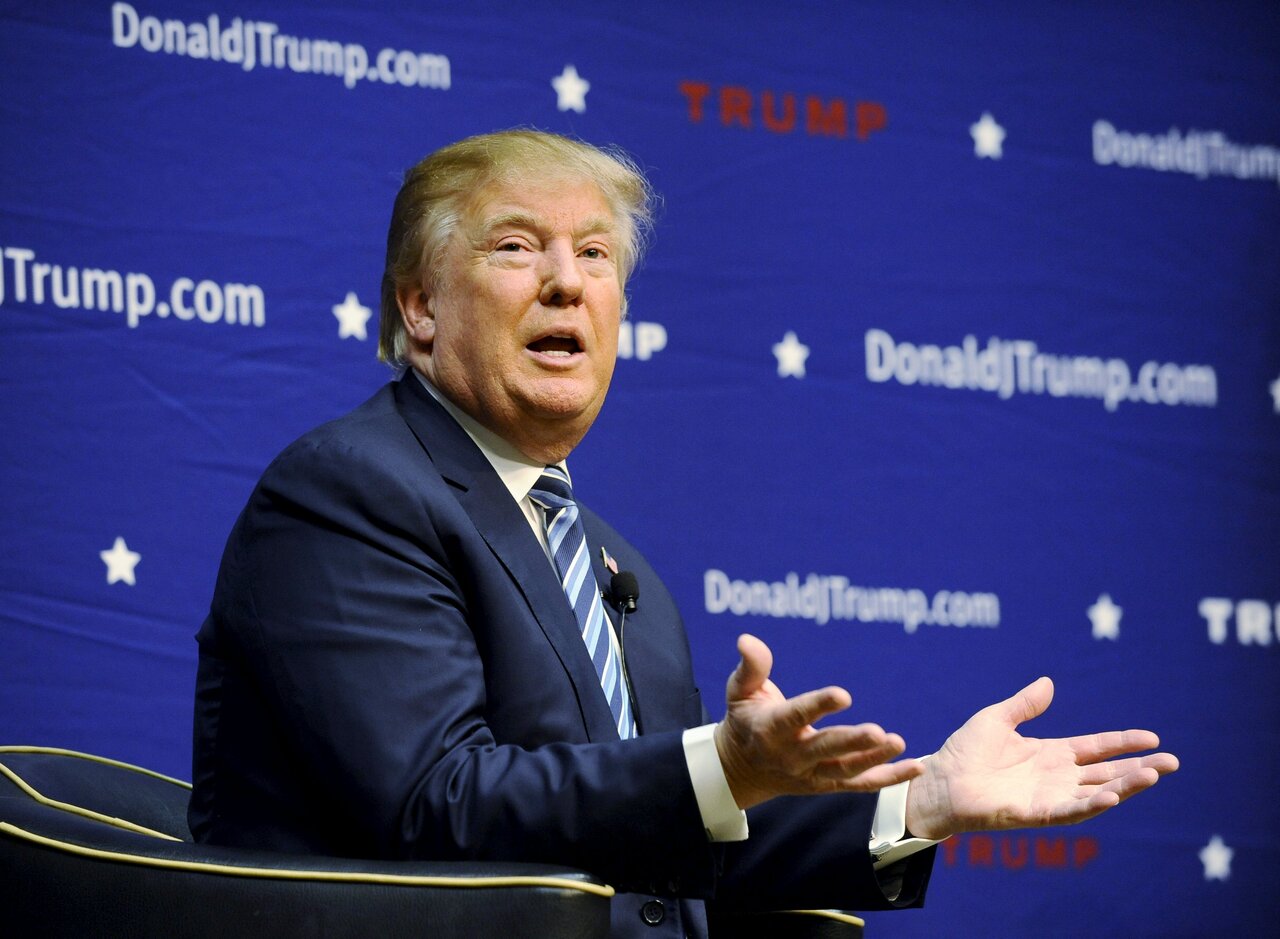
TEHRAN - Daniel Dale, a former Washington correspondent for the Toronto Star wrote an analysis casting light on Donald Trump’s lies, calling him a “fabulist”.
“Trump is not only a fabulist but a frequent dupe for other fabulists,” Dale wrote on the CNN website.
“There is a pro-dishonesty constituency within his base, at least when that dishonesty is perceived to target the ‘right’ people,” he notes.
Dale, who has joined CNN, says “when Trump gets in trouble, he ramps up the dishonesty.”
He also says “a staggering percentage of the figures Trump uses are incorrect.”
According to the Washington Post fact checker, Trump, who is known as the liar-in-chief, made 30,573 false or misleading claims during his first presidency, from January 20, 2017, to January 20, 2021. This amounted to an average of approximately 21 claims per day over his four-year term.
The Associated Press also fact-checked claims made at Trump's first cabinet meeting in January 2026, including his assertion that $18 trillion in investment was flowing into the United States, which it found unsupported and substantially exaggerated.
The following is the text of Dale’s article:
Ten years ago this month, in my old job as Washington correspondent for the Toronto Star, I started what I believed would be a quick little side project: fact-checking underdog presidential candidate Donald Trump, who was telling a remarkable number of lies but was rarely being corrected. Like a lot of people, I thought Trump would lose the 2016 election.
I was very wrong. And Trump continued to be very wrong, about a dizzying variety of subjects, for the next decade.
His relentless dishonesty has become a central feature of US and world politics. Voters and members of Congress, allies and adversaries, CEOs and investors alike have had to try to figure out how to read a man whose words are so frequently not true.
How frequently? Two months before Election Day in 2020, I had to abandon my four-year-old project of fact-checking each and every Trump statement. He was telling so many campaign lies that I’d become physically unable to look into all of them while living something loosely resembling a healthy life. By then, I’d recorded more than 8,500 false claims since September 2016.
I took a brief break from Trump-checking when he left office in 2021, replaced by a Democratic president with his own accuracy problems but nowhere near the volume or variety of Trump’s falsehoods. And then, less than two years later, Trump was back at the top of the news. I counted more than 20 false or misleading claims in his 2022 speech launching his third presidential campaign. He has not gotten any more factual since.
Since I joined CNN as a fact-check reporter in 2019, I’ve devoted most of my reporting time to the nuts-and-bolts work of separating fact from fiction. But spending hundreds of hours immersed in Trump’s rhetoric has given me some insights and personal opinions about the nature of his lying, how it is received by the public and how it is covered by the media.
There is no Washington liar like Trump
Joe Biden sometimes lied, JD Vance sometimes lies, Republicans and Democrats in Congress sometimes lie, Cabinet secretaries notably including Robert F. Kennedy Jr. sometimes lie; Washington is not the nation’s capital of straight shooting. But it’s abundantly clear that there is no public official in Washington who lies like Trump – not as constantly, not as obviously, not about as many topics. I’ve heard people dismiss Trump’s mendacity with a shrugging “they all lie,” but we are witnessing a rare, very possibly once-in-a-lifetime political liar.
The bigger the crisis, the more Trump lies
Trump’s most concerted lying sprees have come in response to political difficulties: the 2018 midterms in which his party was flailing, the 2019 Ukraine scandal that led to his first impeachment, the 2020 Covid-19 pandemic that was harming his political prospects and the 2020 election he lost. When Trump gets in trouble, he ramps up the dishonesty – even in the cases where dishonesty created some of the trouble in the first place.
The smallest lies are the most distinguishing lies
A lot of people expect politicians to try to lie their way out of a career-threatening jam or lie to make their signature policies look better. The subjects Trump has lied about include a nonexistent phone call he claimed to have received from the Boy Scouts, a nonexistent Michigan “Man of the Year” award he claimed to have received years ago, and whether there were any empty seats in venues in which seats were visibly empty. None of these things are important in the slightest, but Trump’s brain has seen fit to make up a story about them. It’s a special trait.
Many Trump's lies never go away
People sometimes ask how I can debunk Trump lies immediately after he utters them. I don’t have any magic tricks. My (non-)secret is that he says the same untrue things again and again. The first time, it might take a while to research; by the 10th or 100th time, I can recite the debunking half-asleep – and there actually is a 100th time for some of the lies.
Trump has tells
Like a bad poker player, Trump has tells that indicate he is likely lying. If he delivers a story featuring an unnamed person calling him “sir,” it’s often fiction. So are many of his stories about burly working-class men crying in his presence and a good portion of his stories involving one of his critics supposedly having come to him begging. What do these colorful but dubious tales have in common? They position him as a dominant figure to whom others – even large dudes – genuflect.
All of Trump’s numbers are suspect
Poll numbers, inflation numbers, investment numbers, gas-price numbers, foreign policy numbers, crowd-size numbers, virtually every other kind of number – a staggering percentage of the figures Trump uses are incorrect. Even when an accurate statistic would make him look good, the businessman who used to inflate his reality show ratings and the size of his buildings tends to choose an inaccurate statistic that would make him look a little better. If “sir” is one of the best indications he is not telling the truth, so is him simply using a figure, any figure.
Trump is not only a supplier of bad information but a consumer of it
Trump has concocted hundreds of lies for his own advantage. But many of the laughable conspiracy theories he has promoted were borrowed from other people, and he often appears to truly believe them. That might be worse, not better. The most powerful person in the world, with access to endless expertise upon request, is not only a fabulist but a frequent dupe for other fabulists.
Trump is aware of some fact checks. He just doesn’t care
Unless you count blocking me on Twitter in 2017, Trump has never publicly acknowledged my existence. But he has sometimes acknowledged he’s aware of fact checks – while simultaneously sticking with the lies those fact checks corrected, evidently shameless about having had to be corrected.
For example, Trump has repeatedly noted that people have pointed out his claim that Biden presided over the very highest inflation in US history as incorrect. But then Trump has immediately gone on to repeat the very-highest-ever claim once more, insisting he still believes it. “Some people will correct me because they always love to correct me, even though I’m right about everything,” he said, piling another lie on top of the initial one, during a December rendition of the routine.
Trump is now surrounded by people comfortable with his lies
During Trump’s first term, White House aides would rarely respond to reporters’ questions about his lies; after all, it’s hard to defend the indefensible. But now he has surrounded himself with people willing to try. During his second term, official spokespeople regularly declare him “right” about things he is demonstrably wrong about. In a Republican ecosystem currently dominated by Trump loyalists, it’s far from career-ending to shred your credibility with the mainstream media in service of the boss.
The mainstream media doesn’t handle Trump’s lying well enough
Pro-Trump media entities have shown embarrassingly little interest in addressing his lies. But more neutral outlets have regularly failed, too. On the last full day of Trump’s first presidency in 2021, I wrote, “Too often, coverage of flagrantly dishonest Trump speeches still mentioned the dishonesty in passing or not at all. Too often, coverage still quoted the president’s lies without explaining that they were wrong.” More than five years later, these problems persist.
There are various reasons for that, including reflexive adherence to old habits, a Trump-driven deluge of breaking news and the diminished number of employed reporters. (CNN is one of very few outlets that has a full-time political fact-checker.) One of the key explanations, though, is one I wrote about back in 2017: “Trump is a human version of computer hackers’ denial-of-service attacks, flooding systems with more disinformation than they are designed to handle.” If a politician tells one blatant lie, it’s likely to get heavy coverage; if a politician tells blatant lies every week for years, it’s likely that most outlets will cease viewing them as news and that the majority will be treated as background noise.
In other words, the media strategy that former Trump White House official Steve Bannon memorably described in 2018 – “flood the zone with sh*t” – has proved effective in getting lots of falsehoods into the public discourse virtually unchallenged.
A lot of people care about Trump’s lying
When I give speeches about my work reporting on Trump’s lies, one of the most common questions I get from the audience is some variation of, “Thank you, but it’s clear that nobody cares, right?” I argue that this is false, too. It’s clear that millions of Americans either don’t believe debunkings from mainstream outlets or aren’t interested in them, but it’s also clear that millions of Americans want to know when and how the president is trying to deceive them.
Polls spanning Trump’s entire career have found that somewhere around twice as many Americans do not think he is honest and trustworthy as think he is honest and trustworthy. He’s won two presidential elections, of course, but it’s not like he’s ever convinced the entire population to stop caring about whether he is telling the truth.
Facts would matter even if only a few people were seeking them out. Fortunately, it’s far more than a few.
…but a lot of people don’t mind the lying, or even like it
One of my most eye-opening journalistic experiences was a 2017 reporting trip to two Trump-friendly communities in Ohio. Over and over, I heard the president’s supporters say not merely that they didn’t mind his lying but that they actively liked it – because it agitated the establishment they had come to despise. (“We’ve had so much crap in Washington for years, and now we have someone shaking ’em up really good,” one man told me with delight.) I know that many Trump supporters often don’t know he’s lying or believe his policy stances outweigh the dishonesty. But I’ve also come to understand that there is a pro-dishonesty constituency within his base, at least when that dishonesty is perceived to target the “right” people.
Speaking without a filter helps political liars be viewed as honest
I observed this phenomenon with the first frequent political liar I covered, the bellicose former Toronto mayor Rob Ford. A politician who gives the impression that they authentically speak their mind is likely to be seen by many as honest even if a high proportion of their actual words are not true. Trump has always done badly in honesty polling, but his insult-heavy, damn-the-teleprompters style has also helped convince a segment of the populace that he is not only reasonably truthful but especially truthful.
Trump’s most self-damaging lies are about prices
When Trump lies about a military deal with South Korea or Canada’s agricultural policies or the actions of some Democrat somewhere, the average voter may not know or much care that he is wildly inaccurate. When he lies that every price is lower than when he took office, or that almost every price is falling “rapidly,” even his most fervent supporters can see with their own eyes that he’s trying to trick them. I suspect that his disastrous present polling on the cost of living, and generally poor approval ratings, are connected not only to inflation itself but also his decision to aggressively deny it exists.
The lies cause real harm
Some of Trump’s lies are so bizarre or trivial that I can’t help but laugh. On the whole, though, his lies have been deeply harmful to the country. People died because of the Capitol riot prompted by his lies about the 2020 election. His lies downplaying Covid-19 almost certainly led to deaths, too. Specific people targeted by his lies, including journalists, judges and election workers, have faced threats and harassment. His lies have worsened innumerable public debates around critical policy issues. And American democracy itself is worse off for all the lying, too.
Leave a Comment